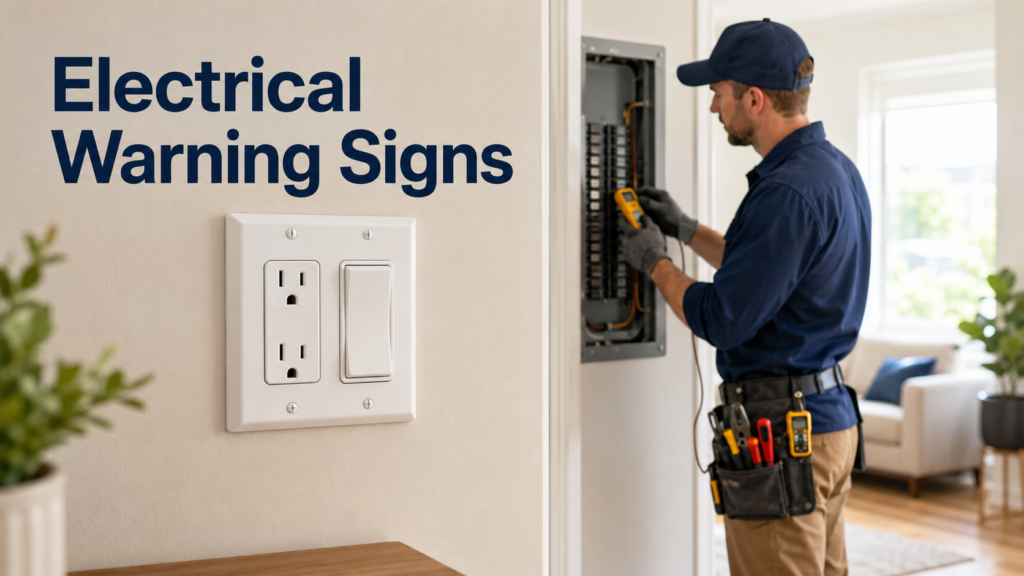
Home Electrical Warning Signs You Should Never Ignore
A home’s electrical system usually works quietly in the background. When warning signs appear, however, they should not be ignored. Electrical problems can create shock and fire hazards, and many are not appropriate do-it-yourself projects.
Homeowners can still play an important role by recognizing visible warning signs, avoiding unsafe conditions, and knowing when to contact a licensed electrician.
Frequently Tripped Circuit Breakers
A circuit breaker may occasionally trip when too many appliances are operating on the same circuit. Repeated tripping can indicate an overloaded circuit, a faulty appliance, damaged wiring, or another problem requiring professional evaluation.
Do not repeatedly reset a breaker without determining why it is tripping. If it trips again immediately, leave it off and contact a licensed electrician.
Flickering or Dimming Lights
A single flickering bulb may simply be loose or nearing the end of its useful life. Flickering throughout the home—or lights that dim when an appliance starts—could indicate a loose connection, overloaded circuit, or inadequate electrical service.
Pay attention to when and where it happens. This information can help an electrician identify the cause.
Warm or Discolored Outlets and Switches
Outlets and switches should not feel unusually warm or appear scorched or discolored. These signs can indicate overheating, loose wiring, or excessive electrical demand.
Stop using the affected outlet or switch and have it professionally inspected. Do not remove the cover or attempt to examine the wiring yourself.
Buzzing, Crackling or Sparking
Electrical outlets, switches, fixtures, and breaker panels generally should not buzz, crackle, or spark during normal operation. Even a minor sound can be a warning of a loose connection or damaged component.
Turn off and avoid using the affected device if you can do so safely. Contact an electrician promptly.
Burning or Hot-Plastic Odors
A burning smell without an obvious source may come from overheated wiring, an outlet, an appliance, or another electrical component. Because damaged wiring may be hidden inside a wall, the source is not always visible.
If you notice smoke, flames, intense heat, or an immediate fire risk, leave the home and call 911. Do not attempt to locate hidden electrical damage yourself.
Loose Outlets and Plugs
Plugs should fit securely into outlets. If a plug repeatedly falls out, the outlet may be worn and should be replaced by a qualified professional. An outlet that moves when a plug is inserted may also need attention.
Stop using damaged, cracked, loose, or scorched outlets until they have been evaluated.
Extension Cords Used as Permanent Wiring
Extension cords are generally intended for temporary use. Running them under rugs, through doors, or behind furniture can damage the cord and allow heat to build up. Plugging several extension cords or power strips together can also create an unsafe condition.
If a room does not have enough properly located outlets, ask a licensed electrician about adding permanent receptacles.
GFCI Protection Near Water
Ground-fault circuit interrupter protection is commonly used in areas where electricity and water may come into contact, such as bathrooms, kitchens, garages, basements, laundry areas, and exterior locations.
Homeowners can use the built-in TEST and RESET buttons according to the device manufacturer’s instructions. If a GFCI outlet will not test or reset correctly, stop relying on it and have it inspected. Do not open the outlet or touch its wiring.
Older Electrical Panels and Wiring
Older homes may have electrical systems that were designed before today’s larger appliances, electronics, home offices, and charging equipment became common. Age alone does not prove that a system is unsafe, but certain older panels, wiring types, modified circuits, and undersized services may deserve professional evaluation.
An inspection may be especially worthwhile when:
- Buying or selling an older home
- Planning a major renovation
- Installing an EV charger or large appliance
- Adding a hot tub, pool, or finished basement
- Breakers trip frequently
- The home has ungrounded two-prong outlets
- Previous electrical work appears informal or undocumented
- The home’s electrical history is unknown
What Homeowners Can Safely Do
Homeowners can visually observe accessible outlets, switches, cords, and fixtures without taking anything apart. They can also note the location, timing, frequency, sound, smell, or appliance involved when a problem occurs.
However, homeowners should not remove a breaker-panel cover, handle exposed wiring, insert objects into outlets, or attempt repairs beyond their training. Electrical safety is one area where calling a qualified professional early can prevent a much larger problem.
When in Doubt, Have It Checked
Not every flickering light or tripped breaker means that a home has a serious electrical defect. But repeated or unusual symptoms deserve attention. A licensed electrician can evaluate the condition, identify the cause, and recommend appropriate repairs or upgrades.
Home Age Update Guide can help you consider whether your home’s major components may be approaching an age when closer evaluation makes sense. It does not replace an electrical inspection, but it can help you ask better questions and plan ahead.
Visit HomeUpdateOptimizer.com to see where your home may stand.
You can also explore:
- HomeValueOptimizer.com — Compare and refine online home-value estimates.
- AVMOptimizer.com — Account for condition and improvements that an automated valuation may overlook.
Safety notice: This article provides general information to help homeowners recognize possible concerns. It is not a diagnosis, electrical inspection, or repair guide. Do not touch exposed wiring or open an electrical panel. If you observe smoke, fire, intense heat, or an immediate danger, leave the area and contact emergency services.