Is Your Home’s Exterior Paint Getting Too Old?
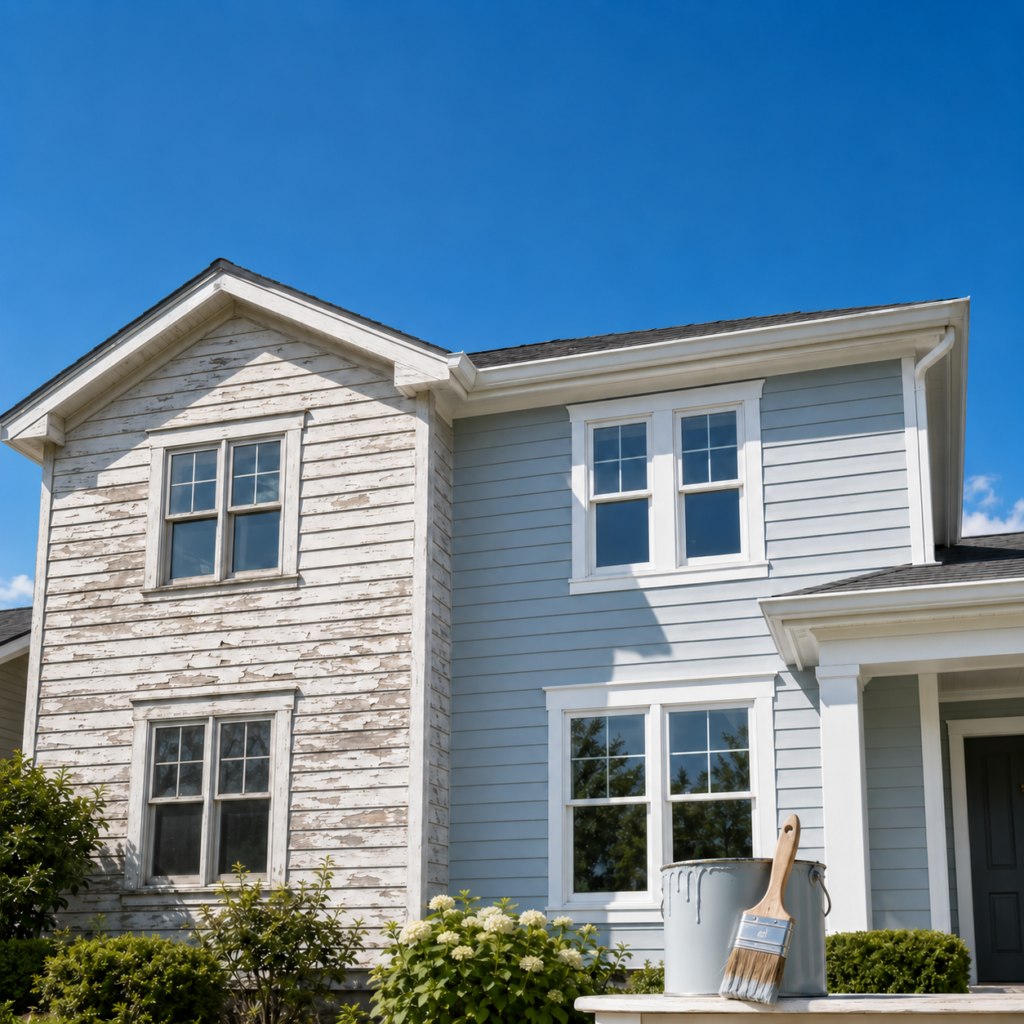
Exterior paint does more than improve a home’s appearance. It also helps protect siding, trim and other exterior surfaces from sun, moisture and changing weather conditions. When paint begins to deteriorate, delaying maintenance can allow relatively minor problems to become more expensive repairs.
Warning signs that exterior paint needs attention
Walk around your home at least once a year and look closely at the siding, trim, window frames, doors and other painted surfaces. Common warning signs include:
- Peeling or flaking paint
- Cracks or bubbles in the finish
- Fading or uneven color
- Chalky residue on the surface
- Exposed or discolored wood
- Open joints or deteriorated caulking
- Soft, warped or damaged trim
- Mildew or repeated moisture staining
Bubbling paint deserves particular attention because it can result from heat, moisture or both. Simply painting over it may not solve the underlying problem. Benjamin Moore’s exterior-paint guidance
How long should exterior paint last?
There is no single answer for every home. Paint life can vary considerably based on:
- The siding or trim material
- Quality of the previous paint
- Surface preparation
- Sun and weather exposure
- Moisture conditions
- Number and quality of paint coats
- Local climate
- Ongoing maintenance
One side of a house may deteriorate faster than the others because it receives more direct sunlight, wind or moisture. This is why the actual condition is more important than relying only on the date the home was last painted.
When are touch-ups enough?
Small areas of fading, worn caulk or isolated peeling may be manageable if the surrounding paint remains firmly attached and the surface beneath it is sound.
A complete repaint may be more appropriate when deterioration is widespread, colors are noticeably uneven or multiple sides of the home are showing age. Any damaged wood, water entry or other underlying problem should be corrected before repainting.
Proper preparation is extremely important. Loose paint generally needs to be removed, rough edges smoothed and damaged surfaces repaired so the new primer and paint can adhere correctly. Exterior preparation guidance from Benjamin Moore
A special concern for homes built before 1978
Older paint may contain lead. Scraping, sanding or disturbing it can create hazardous dust.
The EPA recommends using lead-safe practices when working on homes built before 1978. Contractors performing covered work must meet federal certification requirements. Homeowners should review the EPA’s lead-safe renovation guidance before starting a project.
Exterior paint and resale appeal
Peeling or badly faded paint can create a poor first impression before a buyer ever enters the home. Buyers may also worry that visible deterioration indicates deferred maintenance elsewhere.
Fresh paint does not guarantee a specific increase in value, but a clean and well-maintained exterior can improve marketability. Before selling, homeowners should concentrate on visible problem areas, damaged trim, failing caulk and colors that make the home appear neglected.
Don’t wait for widespread peeling
Exterior paint is easier to manage before large areas begin to fail. Regular inspections and timely repairs can help protect the underlying materials and preserve the home’s appearance.
The year a home was built can provide a useful starting point, but it cannot confirm when the exterior was last painted or its current condition. Always combine age-based guidance with an actual visual inspection.
Helpful Homeowner Tools
🏠 Home Update Optimizer
Discover which parts of your home may be due for attention based on its year built:
HomeUpdateOptimizer.com
📊 Home Value Optimizer
See how condition and improvements may affect your online home-value estimates:
HomeValueOptimizer.com